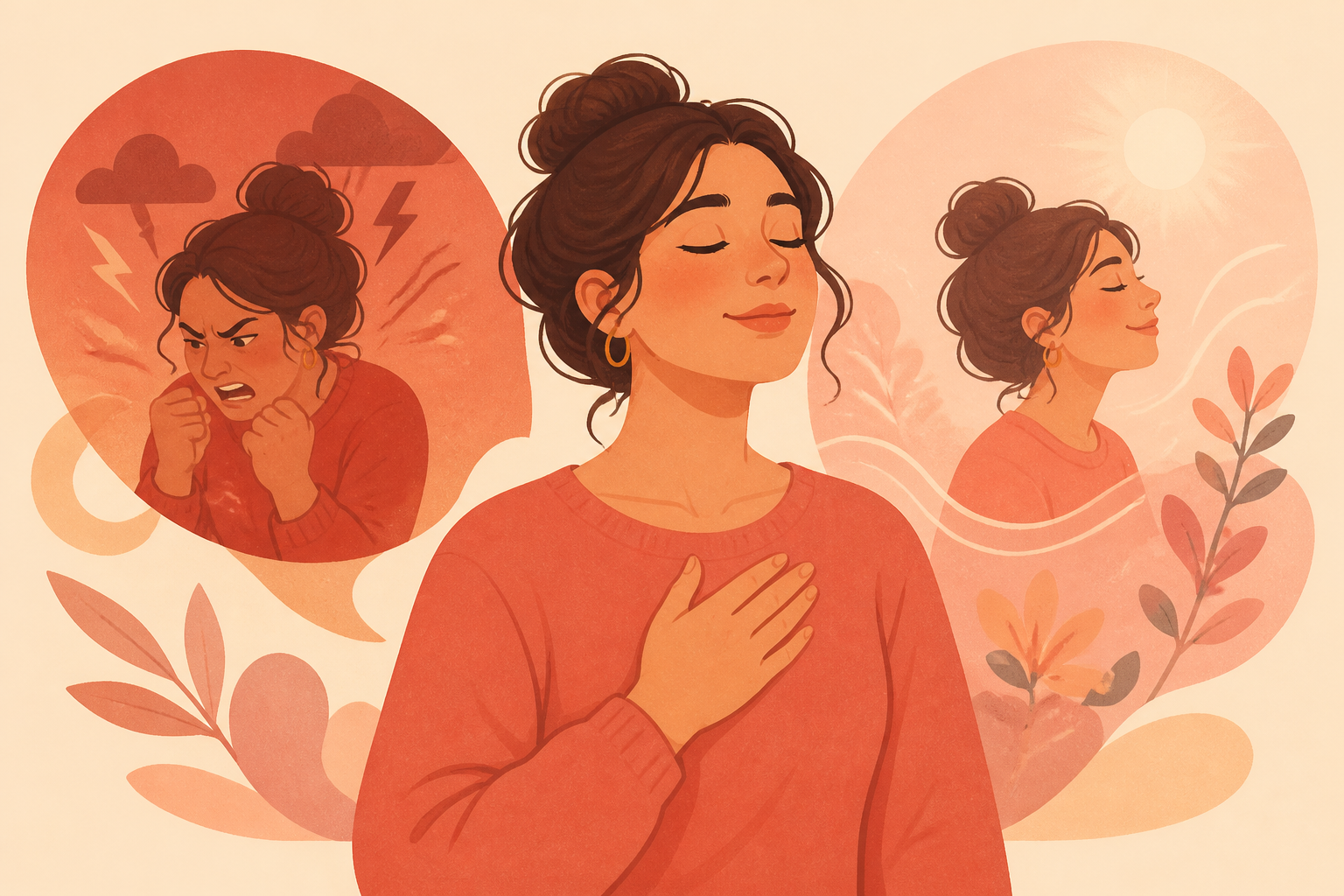
Snapping Over Little Things? — Anger Management That Actually Works
It was nothing, really. But somehow you snapped, the words flew out, and their face went stiff. Then comes the regret as you walk away: “Why did I do that? Why do I lose it like this?” And you start calling yourself a “bad person.”
Sound like you?
Snapping doesn’t make you a bad person. It may simply be a sign that something inside you isn’t being met.
Psychologist Marshall Rosenberg, creator of Nonviolent Communication (NVC), put it this way: “Anger is a signal that our needs are not being met.” The anger itself isn’t the problem — the problem is missing the real need it points to.
Anger is a “secondary emotion”
Anger usually erupts first, but it’s actually a secondary emotion. Underneath it hide softer, primary feelings.
- Angry at a friend who broke a promise → really, you felt let down
- Snapped at a nagging parent → really, you wanted to be respected
- Exploded over something tiny → really, you were exhausted and needed rest
Anger is the alarm shouting, “Look here — something isn’t being met.”
How to manage anger (antidotes)
Antidote 1. Pause for 6 seconds Anger’s physiological peak is surprisingly short. When it surges, don’t react — breathe and hold for just 6 seconds. A gap opens where the automatic reaction becomes a choice.
- ❌ (instantly) “Are you serious right now?!”
- ✅ (after 6 seconds) “Wait — why am I this angry?”
Antidote 2. Translate anger into a need Don’t stop at “I’m angry.” Find and voice the need beneath it.
- ❌ “Forget it, whatever.”
- ✅ “Honestly, I felt let down. I just wanted you to hear me today.”
Antidote 3. Don’t suppress — notice Bottled anger only builds. It’s not “holding it in,” it’s “noticing.” Just naming it — “ah, I’m exhausted and on edge” — lowers the intensity.
The turning point: Anger isn’t an enemy to eliminate. It’s a warning light that protects you. A red light means some need inside is asking to be cared for. The moment you read that signal, anger becomes a path to understanding yourself.
Closing
Don’t hate yourself for snapping. Anger isn’t proof that you’re a bad person — it’s a signal that something in you needs care.
If it’s hard to look beneath the anger alone, talk it through with Bondi. A psychology-based AI coach helps you find the real feeling hiding under the anger, privately — free to start, with daily chats and psychology tests included.